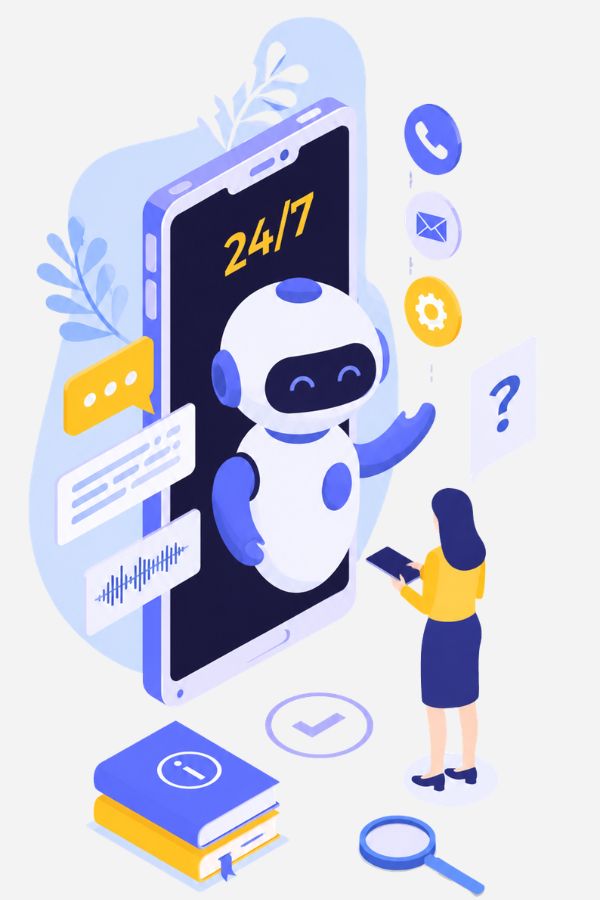
AI assistant

An AI assistant is based on generative AI and its role, much like that of a human assistant, is to help people navigate complex and important tasks. For example, it helps with work, study and official matters by answering questions and carrying out commands in real time.

AI assistant explained

From technological perspective, a virtual assistant uses data and computing power to help you accomplish tasks more efficiently: from generating content in seconds to gaining data insights with a single command (voice and speech is data as well). Simply put, the goal of an AI assistant is to increase productivity and efficiency, in other words, it helps you to do best work (both simple and complex tasks) while spending less time and effort.

What types of AI assistants are there?

AI assistants come in the form of:
standalone applications, such as ChatGPT
an element of IT systems – they navigate systems and assist humans in completing specific tasks
an element of a broader infrastructure – when integrated with other applications, they increase work productivity

How does an AI assistant work?

An AI assistant is an intelligent virtual assistant that can help a human user work more quickly and efficiently, thanks to three underlying technologies:
Natural language processing (NLP)

Large language models (LLMs)

Generative AI

The most popular AI assistants in everyday life include:

Alexa (Amazon): A voice assistant integrated with smart home devices that can control them—turning them on and off, checking messages, and more.

Google Assistant: Provides information, manages tasks, and integrates with Google services such as Gmail and Google Calendar.

Siri (Apple): A voice assistant that allows hands-free operation of Apple devices through voice commands, including making calls, sending messages, navigating, and controlling apps.

ChatGPT: Assists with creating and editing content (such as emails, reports, articles, translations, and posts), processing data, generating code for developers, planning and organizing work, and supporting analysis and brainstorming.

Check out AI Assistants Classification and Types

* Source: SAP

By means of accessing: an assistant can

  • Be directly accessible as a chat interface in your browser, like ChatGPT
  • Available as downloadable standalone software (for example, like Parthean)
  • Have integration options with your other tools, just as extensions for your browser like Jasper.
  • Be fully embedded within an existing ecosystem or business infrastructure, in the same way that SAP Joule is integrated with SAP solutions

According to the knowledge base: an assistant can

  • Rely solely on external information (i.e., the Internet and datasets it was trained on) and what it learns from interacting with you
  • Be able to integrate with your or your company’s structured and unstructured data, such as customer databases or HR policy documents

By application versatility: an assistant can

  • Be a versatile general assistant, like Google’s Gemini
  • Be an industry- or use-specific assistant or adviser, like GitHub Copilot, tailored specifically to developers and coders, or like the financial assistant Parthean AI
  • Be a versatile work co-pilot integrated into an existing environment but serving multiple purposes. For example, Joule is integrated with multiple SAP solutions, catering to a variety of business use cases.

AI assistant is more than just a chatbot

The most popular standalone assistants (like ChatGPT) can provide answers and perform certain tasks, but they rely on external information from the Internet. They don’t “know” you or your business, and may lack context. A dedicated AI assistant knows the user and has access to productivity-enhancing tools and data, so it can be:

Integrated with your data sources to provide context-relevant output, such as, for example, customer information, HR policy documents, or supply chain data

Embedded within other tools, including productivity software and business systems—for example SAP Joule

Used for a wider range of action and output types, depending on the tasks – for example supporting customer service agents during their calls with customers
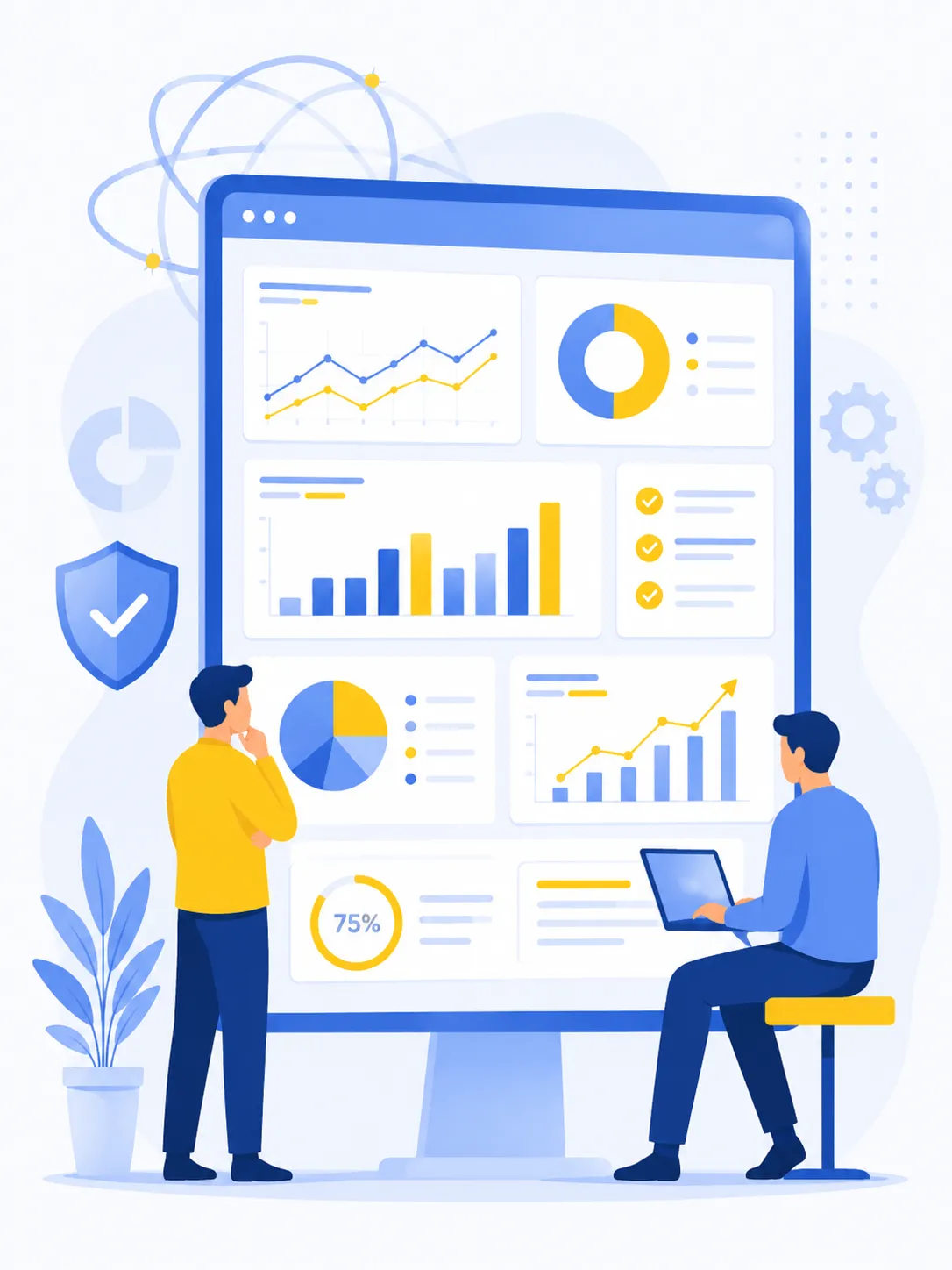
asystent ai comtrust

What are the benefits of using an AI assistant for work and business?

Your AI assistant can speak natural language, take action, and generate insights and content. It joins the computational power of artificial intelligence and the human mind. Your assistant is a fast, trustworthy, competent colleague who knows your business and can help you save time and resources, gain more reliable insights, and achieve better outcomes.

You can achieve your best—but with less time and effort:

Accuracy and fit
With AI designed for business and integrated into your workflows, your AI assistant has the context and infrastructure to deliver immediate business impact exactly where you need it.
Effective decision-making
When your AI assistant is grounded in your business data, you can get quick answers and intelligent insights on demand, without bottlenecks and with less risk of human error.
Security and Compliance
Proprietary data and tools require privacy, security, and compliance. Therefore, they cannot be entrusted to publicly available AI models. The dedicated AI assistant embedded in your business solutions allows you to maintain full control over decision-making and your data privacy in a secure environment.
Up-to-date and Real-time
When your AI assistant is embedded into your business ecosystem, it can automatically keep up with changes and updates in your data. It helps you to leverage knowledge and processes ensuring that all knowledge is readily available and working for you. Up-to-date knowledge is the foundation for analysis, forecasting, and performance improvement.

What are the common AI assistant use cases?

AI assistants are used across various industries and roles. Here are the most popular business use case:

Software development

If you are a software developer your AI assistant can help you to write code, configure application logic, and simplify the generation of data models and UI annotations.

Recruitment and people management

If you are a HR specialist your AI assistant can help you to write job descriptions, streamline candidate assessment, prepare for interviews and onboarding of new employees, and help empower professional growth within the company.

Sales enablement and business optimisation

If you are a sales person your AI assistant can help you to write emails to customers, gain relevant insights more quickly, and navigate productivity software. If you are a business development manager your AI assistant maximises the efficiency of your business operations from finance and logistics to manufacturing and procurement.

Marketing and customer experience

If you are a marketing or CX specialist your AI assistant can help you to quickly generate content, automate and accelerate target groups segmentation, enhance customer experience, and devise data-driven strategies.

Customer Service and Call Center

If you are a customer service agent your AI assistant can help you provide conversations with customers, suggest best solutions to customers issues, and instantly share documents and relevant resources from the knowledge base.
zastosowania asystenta AI

AI Assistant in Business Systems

Your AI assistant in business systems is an intelligent, embedded assistant that understands enterprise processes, interprets business data, and drives real outcomes. Designed to seamlessly integrate into your workflows, it amplifies productivity, accelerates decision-making, and empowers innovation across the organization. It assistants users with the operation and navigation of IT systems. SAP Joule is the best example of AI copilot built into the SAP ecosystem.
Instead of generic answers your AI assistant delivers personalized suggestions and contextual insights in real time—right where you need them. Whether you’re analyzing financial data, managing procurement, or responding to supply chain shifts, it helps streamline decision-making and drive outcomes with speed and precision.
kiedy wdrozyc asystenta ai

Your AI assistant is especially useful when:

  • You want to reduce time spent on routine analysis and reporting.
  • You’re looking to accelerate decisions in complex, data-heavy processes.
  • You need consistent guidance across functions like HR, Finance, Procurement, and Supply Chain.
  • You’re scaling automation and need AI that fits seamlessly into existing workflows.
  • You’re preparing your organization for next-generation, AI-driven operations.

    Enterprise-class AI assistants like SAP Joule offer:

    • Contextual recommendations – Get tailored insights and next steps based on your real-time business context.
    • Process automation support – Automate tasks and approvals, reducing manual effort across functions.
    • Natural language queries – Enables casual, human-like conversation – Find answers and trigger actions with simple, conversational language.
    • Data-driven decision assistance – Instantly analyze complex datasets and surface critical insights.
    • Cross-application collaboration – AI assistants like Jule SAP help connect insights and actions across SAP solutions – for end-to-end insights.
    • Secure and scalable AI – Leverage enterprise-grade security and compliance standards at scale.
    • Complies with AI ethics guidelines and GDPR requirements – Includes robust privacy and access control mechanisms, SOC-II compliant for enterprise-grade security, publish and subscribe mechanism.
    • Creates a uniquely configured digital assistant per user or role, supports flexible, event-driven interaction and automatic updates.
    • Supports direct search and interaction with SAP Help Portals content and technical documentation via natural language.

    AI Agent Assist in customer service and call center

    Modern customer service combines Virtual Agents and AI Assistants to support human work. In Sinch Contact Center, the Virtual Agent and the AI Assistant are not a single tool, but a set of functions based on artificial intelligence. These AI tools automate customer interactions, support agents in real-time, and handle routing. AI capabilities allow for the automation of repetitive tasks and the orchestration of complex customer journeys across communication channels to improve agent efficiency and customer experience.

    AI Agent Assist capabilities within Contact Center provide real-time human agents’ support:
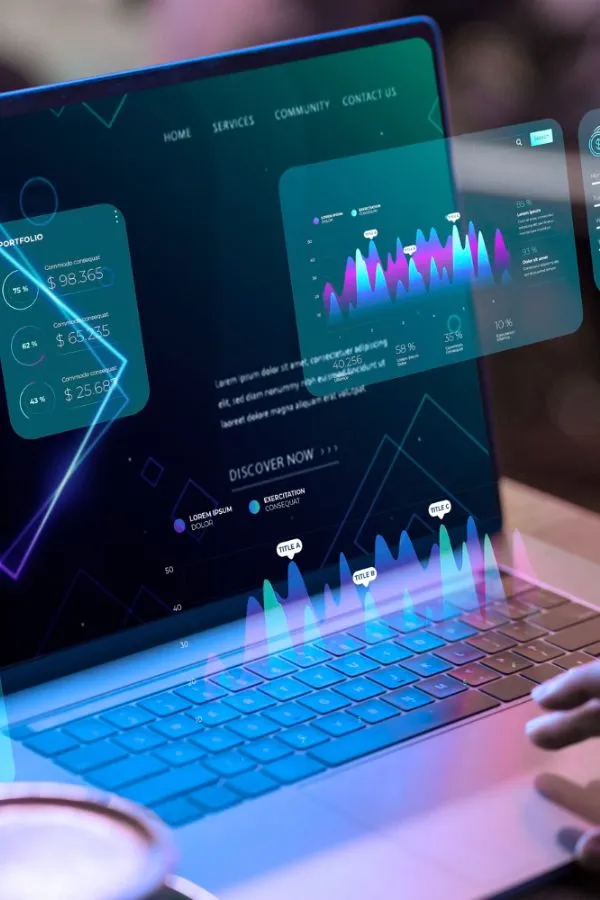
    Knowledge Base AI: Embedded in Sinch Contact Pro, this feature allows AI to suggest answers to agents, speeding up resolution times.
    Intelligent Routing: AI analyzes the customer’s needs at the beginning of the interaction and directs them to the best-matched agent based on their skills (Skill-based routing) or language.
    Sentiment and Content Analysis: AI analyzes emails and chats, automatically categorizing their subject and examining customer emotions.
    Summaries and multilingual translation on-line during the conversation significantly improve the work of agents.
    monitoring w call center

    Key specific details of how AI Agent Assist functions:
    zadania i funkcje asystentow ai

    1. Smart Knowledge Suggestions

    Instead of the agent manually searching through manuals or FAQs, the AI listens to or reads the conversation in real-time.

    • Intent Recognition: The AI identifies what the customer is asking (e.g., “How do I return this?”) and instantly pushes relevant “Knowledge Cards” to the agent’s screen.
    • Reduced Search Time: This significantly lowers the Average Handle Time (AHT) because the information finds the agent, rather than the agent finding the information.

    2. Generative AI Capabilities (GenAI)

    Sinch leverages Large Language Models (like GPT via Azure OpenAI) to offer creative and structural support:

    • Response Drafting: The assistant can draft a complete reply based on the context of the chat. The agent simply reviews, edits if necessary, and hits send.
    • Tone Adjustment: Agents can highlight a rough draft and ask the AI to make it “more professional,” “shorter,” or “more empathetic.”
    • Auto-Summarization: One of the most popular features—when a call or chat ends, the AI generates a concise summary of the issue and the resolution, automatically pasting it into the CRM notes.

    3. Real-Time Translation

    Agent Assist removes language barriers by providing Live Translation within Contact Center solution.

    • The customer types in their native language (e.g., Spanish).
    • The agent sees the message in English (or their preferred language).
    • The agent replies in English, and the AI translates it back to Spanish for the customer instantly.

    4. Seamless Handover from Bots

    If a customer conversation starts with a bot and is then escalated to a human the following automatically occurs:

    • Context Transfer: The agent doesn’t start from scratch. AI Agent Assist provides a briefing or a summary of what the bot has already tried to do.
    • Data Injection: Any data collected by the bot (like account numbers or email addresses) is automatically displayed to the agent.

    5. Sentiment & Compliance Monitoring

    The AI monitors the “vibe” of the conversation:

    • Sentiment Alerts: If the customer’s language becomes aggressive or highly frustrated, the system can flag this to a supervisor for immediate intervention.
    • Compliance Checks: It can remind agents to say specific required phrases or warn them if they are about to share sensitive data in an unsecure way.

    How does the combination of a Virtual Agent and an AI Assistant work in practice?

    Qualification and Support: The bot (Virtual Agent) asks preliminary questions to understand the problem. Depending on the channel the customer’s inquiry is received through, the bot (chatbot/voicebot) provides answers or performs simple tasks.
    Escalation: If the issue is complex, the Virtual Agent transfers the conversation to a “live” agent (human offloading), providing them with full context and collected data.
    Optimization: During the conversation, the AI Assistant suggests template responses or specific corrective steps to the agent.

    Find out how customers use our products, services and SAP technology. Welcome to contact!

    5 + 1 =

    ul. Powstańców Śląskich 42/12, 01-381 Warszawa

    Products

    SAP Customer Experience

    SAP Field Service Management

    SAP Conversational AI

    SAP Intelligent Robotic Process Automation

    Sinch Contact Pro

    VoIP Infrastructure

    1trust Service

    Services

    Implementations

    Project management

    Integration and Support

    About us

    Company and team

    Partners and technologies

    News