
Omnichannel Banking: The Future of Customer Service
Over more than two decades of banking implementations, we’ve witnessed the evolution from multichannel banking to truly omnichannel experiences—where offline and online interactions are seamlessly integrated and new communication channels such as AI-powered chatbots, WhatsApp, and RCS have become part of the customer journey. While the channels continue to evolve, one thing remains constant: rising customer expectations and, above all, the need for banking operations that are stable, secure, and always available.
In 2025 Sinch surveyed more than 2,800 global consumers and 400 leaders in the financial services industry. Findings from State of customer communications report make clear that customers want four things from their banks when it comes to communications: to feel engaged, informed, safe, and happy. Omnichannel strategies make it possible to deliver on all four.
What is omnichannel banking?
Omnichannel banking provides customers with a coordinated, seamless experience even when they switch between communication channels during the same interaction. That interaction might start in-branch, continue on the phone, and finish online.It sounds simple, but making it happen requires a complex integration between channels customers use such, and even physical branchesvisits.
For example, suppose a customer calls your bank to inquire about a suspicious charge on their most recent statement. They never got a fraud alert, but they don’t recognize the listed vendor because the company is not clearly identified. In an omnichannel banking experience, the customer service agent might make sure the account holder is set up for fraud alerts via text messaging. Perhaps they could test the system right over the phone so the customer knows it’s working. Then, they could investigate the charge, and discover it was a purchase made by the customer’s spouse. To close the loop, the bank might send a follow-up email with a short video explaining how to report suspicious activity in the future.
To the customer, the experience feels simple and seamless. Behind the scenes, it takes advanced technology and careful orchestration across channels.
Omnichannel banking connects each customer touchpoint to provide a unified customer experience. Whether customers engage on a mobile banking app, by phone, or in a branch, support agents have the full picture. That means customers don’t have to repeat themselves, and banks can deliver faster, more efficient service.
And while omnichannel is now a clear customer expectation, there’s still work to do. According to our research, only 51% of financial service companies say they have fully integrated their communication channels with their other FinTech systems.
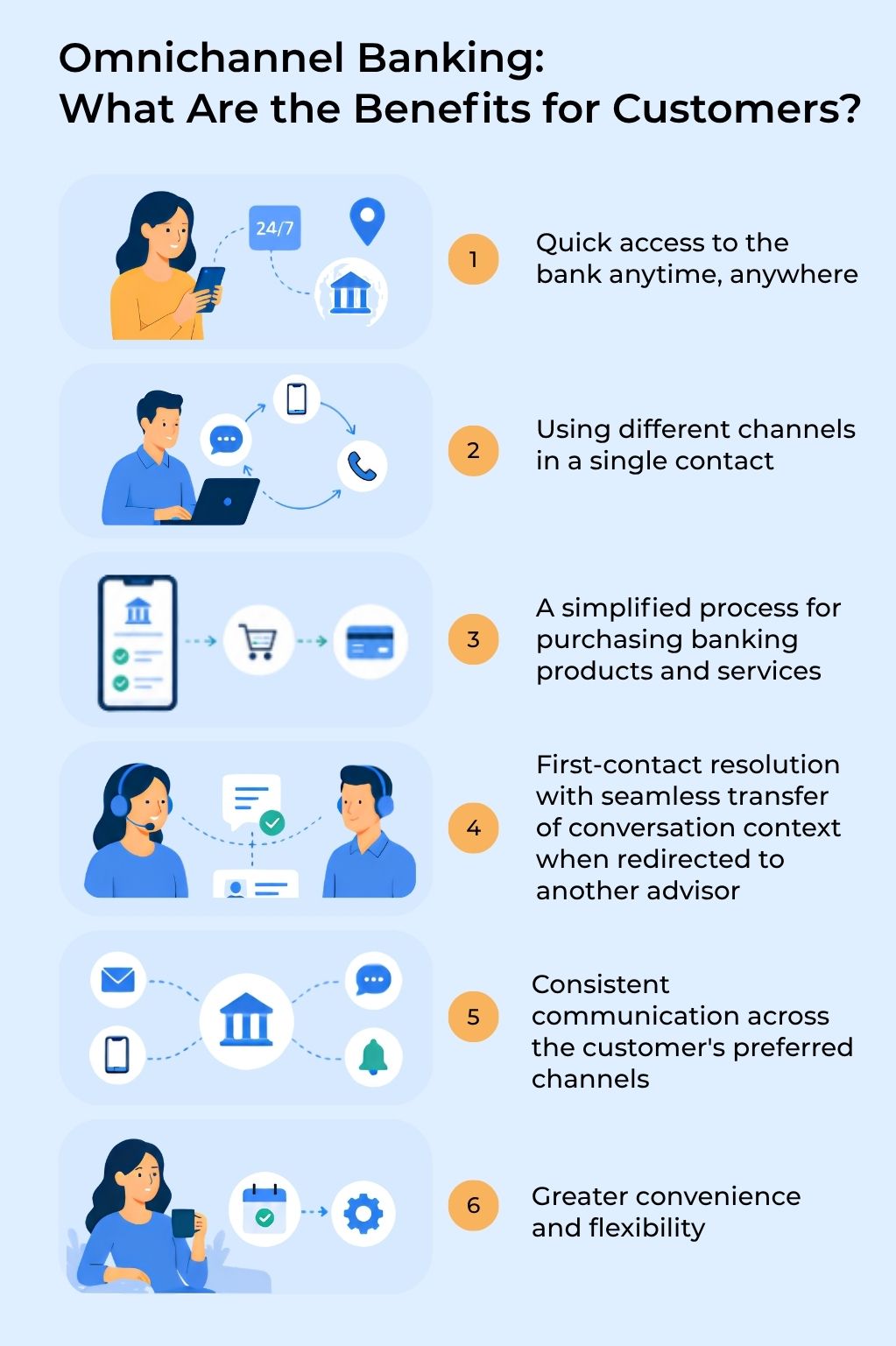
Benefits of omnichannel banking
Embracing omnichannel banking is investing in technology, but it also creates omnichannel customer service centers that offer many benefits
It boosts customer retention
Traditional, disconnected multichannel interactions frustrate customers and make them feel even more outdated. The report mentioned before found that 81% of consumers have a negative reaction when they have to explain their issue multiple times. That’s a clear signal that when people don’t feel valued or heard, trust and loyalty erodes. A true omnichannel strategy solves this problem.
Trust and security
One way to make customers feel safer is to connect and verify them when you’re communicating with them. With the omnichannel approach, this is easier because you can use channels like RCS that enable more security, because the branded message is harder for scammers to fake and customers feel more confident the message is real.
It meets expectations for control and convenience
Your customers want information given to them on their terms. Nearly a quarter (24%) of consumers say they want both an email and a text message for important informational messages. You can easily fulfill these customer preferences with an omnichannel approach. You can retain the context and have a complete view of the conversation history for each customer interaction, no matter the channel.
It resolves queries faster while reducing costs
Omnichannel systems give agents full visibility into past interactions. That leads to faster resolution times and a better user experience. Add conversational AI and automation to handle simple queries, and financial institutions can also reduce costs while keeping service levels high. The key is balance: Automation where it makes sense, and an easy path to human assistance when it matters most.
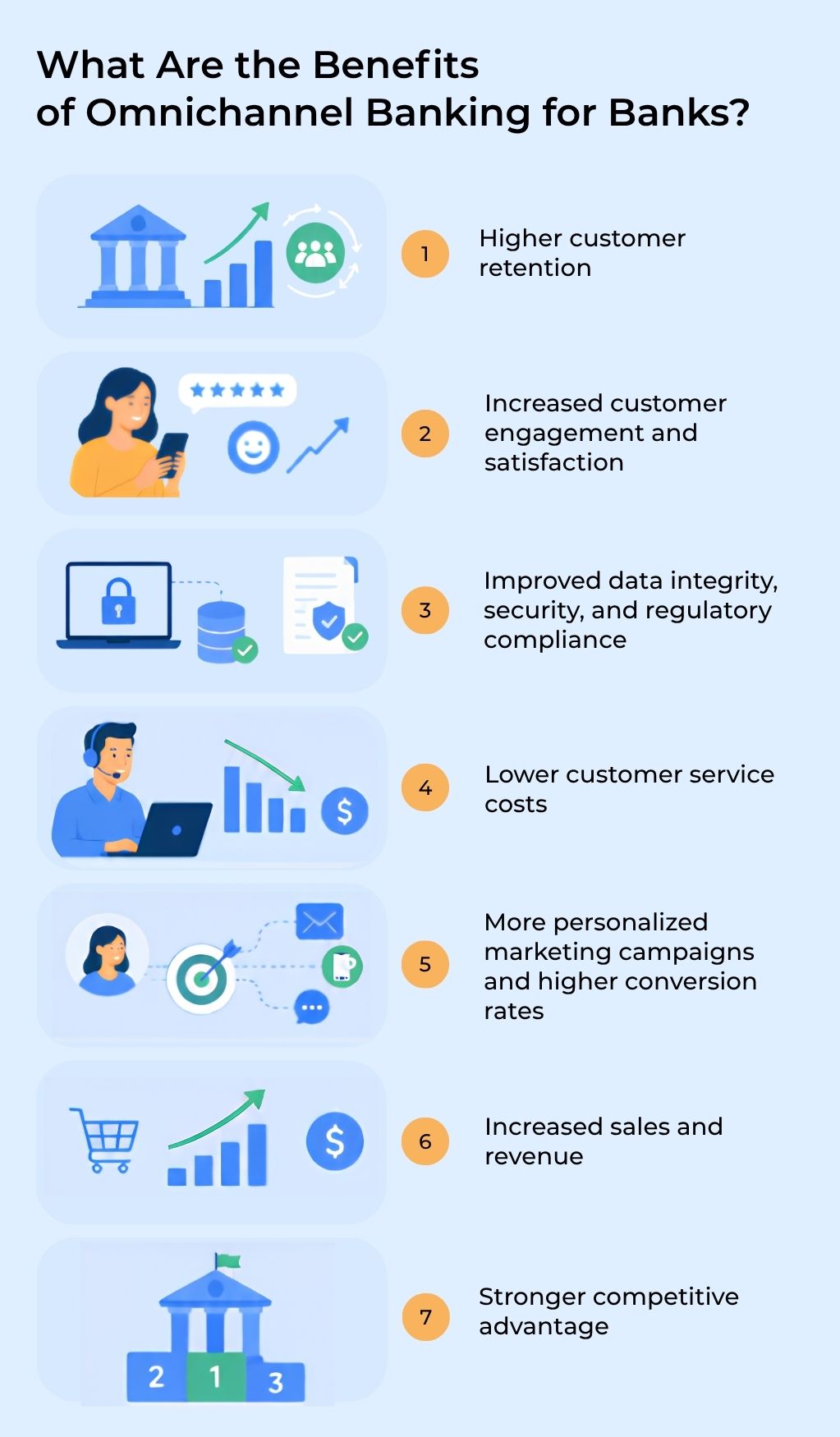
Omnichannel banking trends
Security is shaping strategy
55% of financial service business leaders say security and privacy compliance is their top concern. This isn’t just about protecting customer data from scammers, hackers, and viruses. It’s also about keeping their banking platforms in compliance with all the new laws such as GDPR for email marketing, FINRA, and PCI DSS for security of payment cards.
What you can do for customers in the various communication channels depends in part on what these laws allow you to do and what they require you to do.
RCS is emerging
RCS is gaining momentum, with 55% of financial services leaders saying it’s “game-changing.” Why? Because it strengthens security, improves engagement, and enables interactive, branded experiences that SMS and MMS can’t match. It also increases personalized service and delivers a higher level of customer satisfaction and increases customer engagement. Sinch’s research found that 45% of banks plan to adopt or expand their RCS use in the coming months. As adoption grows, customers will come to expect richer, more secure interactions from their bank.
Banks are shifting to new channels
RCS isn’t the only communication channel banks are considering.
Over the next 12 months, 50% of FinServ organizations plan to invest in using video chat to communicate with customers. 50% also plan to begin using messaging apps like WhatsApp.
Only 2% of banking institutions said they don’t plan to adopt any emerging technologies in the coming year.
AI and automation investments are accelerating
In fact, 65% of banks plan to invest in AI voice assistants and 60% in AI-driven chatbots, though AI in customer communications at scale is proving more demanding than most investment cases account for. All of this is about delivering an online banking experience with more personalized service that’s responsive and trustworthy. The result banks are looking for is higher customer retention.
Younger consumers are ready for AI-driven advice
Not every customer is eager to embrace AI, but younger generations are leading the way. 59% of Gen Z and 53% of millennials say they would use an AI solution for personalized financial recommendations, compared to just 15% of Boomers.
This is another point in favor of an omnichannel banking strategy – one that responds to customer preferences while preserving trust and security.
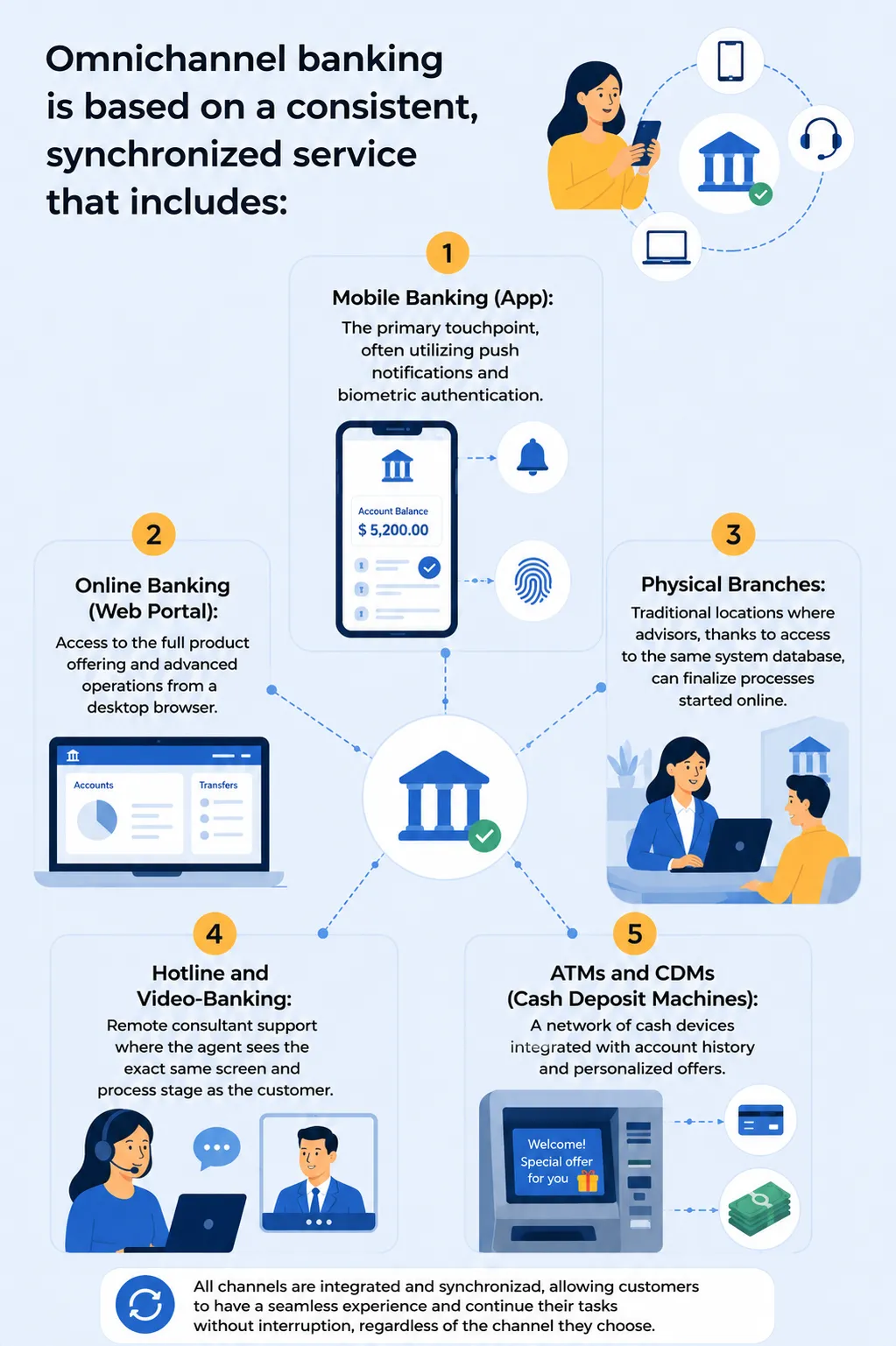
Challenges of implementing an omnichannel banking strategy
The omnichannel approach delivers a better banking experience and greater operational efficiency, but it also takes some effort to implement. Your biggest challenges might be:
- Legacy systems and siloed data: 37% of FinServ leaders say integrating with other systems is a major challenge.
- Compliance and security: 55% cite this as a primary challenge when managing communication problems.
- High costs and complexity: 39% are concerned about communication costs and 15% say the cost of integration is the biggest barrier to going omnichannel.
Of course, many banking institutions are already utilizing an omnichannel approach. So while these challenges are real, you can certainly overcome them with the right technology.
Omnichannel solutions streamline communication and eliminate chaos, and can even help strengthen both security and r compliance. Furthermore, they often reduce risk by standardizing systems and processes. That means omnichannel is about more than convenience – done right, it enhances secure, ensures compliance, and strengthens the trust customers place in their bank – all at once.
FAQ
What is omnichannel in banking?
Omnichannel banking is a customer-centric service model that unifies all physical and digital touchpoints—such as mobile apps, websites, ATMs, and in-branch visits—into a single, continuous experience. It allows users to start a transaction or service request on one channel and seamlessly finish it on another without losing progress or having to repeat information.
What is the difference between multichannel and omnichannel banking?
Omnichannel banking connects all your physical and digital touchpoints into one seamless experience. Instead of channels operating independently, they are fully integrated in real-time. This means you can start a task on one platform—like a mobile app—and finish it on another, such as in a branch or over the phone, without ever needing to repeat your information
How do banks ensure security across omnichannel platforms?
Banks ensure security by using a multi-layered approach where each channel gets verified and secured in its own way. This strategy can include methods such as biometric and multifactor authentication, data encryption, real-time transaction monitoring, and secure channel architecture. Employe training is also critical to closing gaps and ensuring compliance.
How does omnichannel banking improve customer engagement and loyalty?
Customers love omnichannel service because it delivers personalized experiences, reduces friction with call center reps, and fulfills banking services in a more timely fashion. Experiencing this level of interaction with banks results in stronger customer relationships and increased customer loyalty.
Can small banks implement omnichannel strategies effectively?
Yes. Banks of all sizes can set up omnichannel communication strategies. Enterprise-level banks may have more funds to incorporate more channels faster, but banks of all sizes can utilize the most effective modern channels, such as RCS, AI chatbots, and mobile messaging. The key is prioritizing integration and consistency across whichever channels you use. Omnichannel banking hinges on connection, not just convenience.Most banking leaders are already considering many of the channels that make an omnichannel approach possible. And when those channels work together, customers notice. They experience each one when it’s best for their needs – without friction, repetition, or doubt.
Which companies in the financial sector are your clients?
Sinch is trusted by top leaders, including:HSBC, Visa, PayPay, Nordea, Allianz, Nationwide, Oxperta Capital. Comtrust has implemented omnichannel solutions in banking and financial institutions and has been cooperating for years with: Deutsche Bank, GBW, Toyota Bank i Toyota Leasing, Cardif (PNB Paribas), RCI Bank i innymi.
How can I make my communications look modern?
Old-school emails and standard calls look a bit retro next to modern RCS messaging, precision emails, and branded in-app calls. Additionally, AI agents and virtual consultants add a modern touch.
Author:
Joanna Pytlakowska
VP Sales & Marketing, Comtrust




Dowiedz się, jak klienci korzystają z naszych produktów i usług. Zapraszamy do kontaktu!


Produkty
SAP Customer Experience
SAP Field Service Management
SAP Conversational AI
SAP Intelligent Robotic Process Automation
Sinch Contact Pro
Infrastruktura VoIP
1trust Service
Usługi
Wdrożenia
Zarządzanie projektami
Integracje i pomoc techniczna
O nas
O firmie
Partnerzy i technologie
Aktualności