
SAP Omnichannel – Increase Sales
As customers, we’re fickle and want as many options as possible to buy and interact with brands the way we like. And everyone likes different things. The best sellers quickly understood this and entered the omnichannel space.
Multichannel versus SAP omnichannel. So, what’s the difference?
Multichannel shopping has been with us for well over a century. In 1845, Tiffany & Co. published its first mail-order catalog, but it was Pryce Pryce-Jones that created a true mail-order business in 1861. Although they were pioneers of multichannel, they were far from omnichannel, just like many modern retail companies.
“Multi” is not the same as “omni.” In “multi,” the customer does have multiple choices and flexibility regarding how, where, and when to purchase. However, these channels are unrelated, and if the customer switches channels, they must start from scratch. They must re-add the product to their cart, re-tell their story.
Whereas in a true omnichannel shopping experience all the channels integrate into a more seamless experience where customers can pick up wherever they left off—in real time, anywhere. Not only does this let them see their preferences and past actions across channels, it also allows businesses to better leverage data collection to ensure a more personalized and relevant customer experience.
Companies that fail to deliver a consistent experience across every touchpoint risk losing both customers and revenue opportunities. An SAP-powered omnichannel strategy provides the foundation for meeting these expectations and driving business growth.
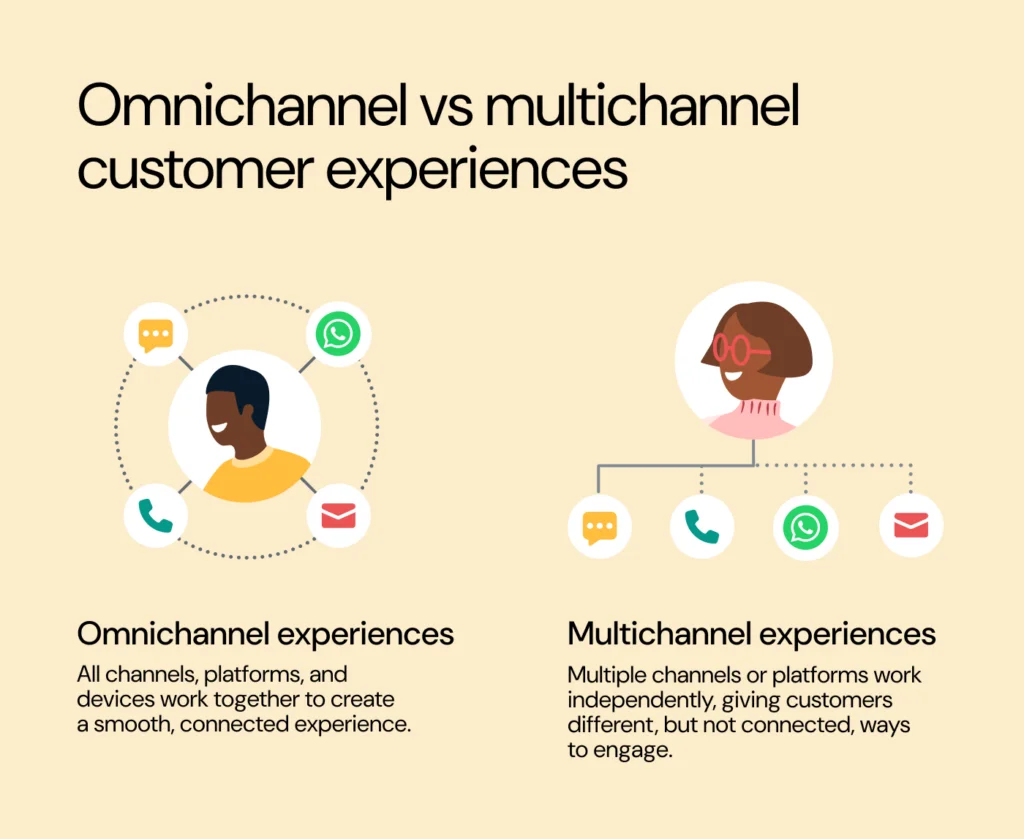
Źródło: Sinch
What Is SAP Omnichannel?
SAP omnichannel is a comprehensive business strategy designed to create consistent customer experiences across every touchpoint. By combining centralized data, intelligent automation, artificial intelligence and advanced analytics, organizations can optimize operations while delivering personalized and seamless interactions. SAP integrates data from multiple channels into one central hub. This omnichannel integration means that sales, marketing, and service teams work off the same customer information—eliminating silos and ensuring that every touchpoint contributes to a coherent, personalized journey.
SAP omnichannel is a customer relations management approach that integrates all sales, customer interaction and marketing channels into a unified ecosystem. It enables organizations to maintain a complete view of each customer, regardless of whether they engage through an e-commerce platform, mobile application, retail store, call center, or social media. By consolidating data across channels, businesses can make faster decisions, deliver personalized experiences, and optimize sales processes throughout the customer journey.
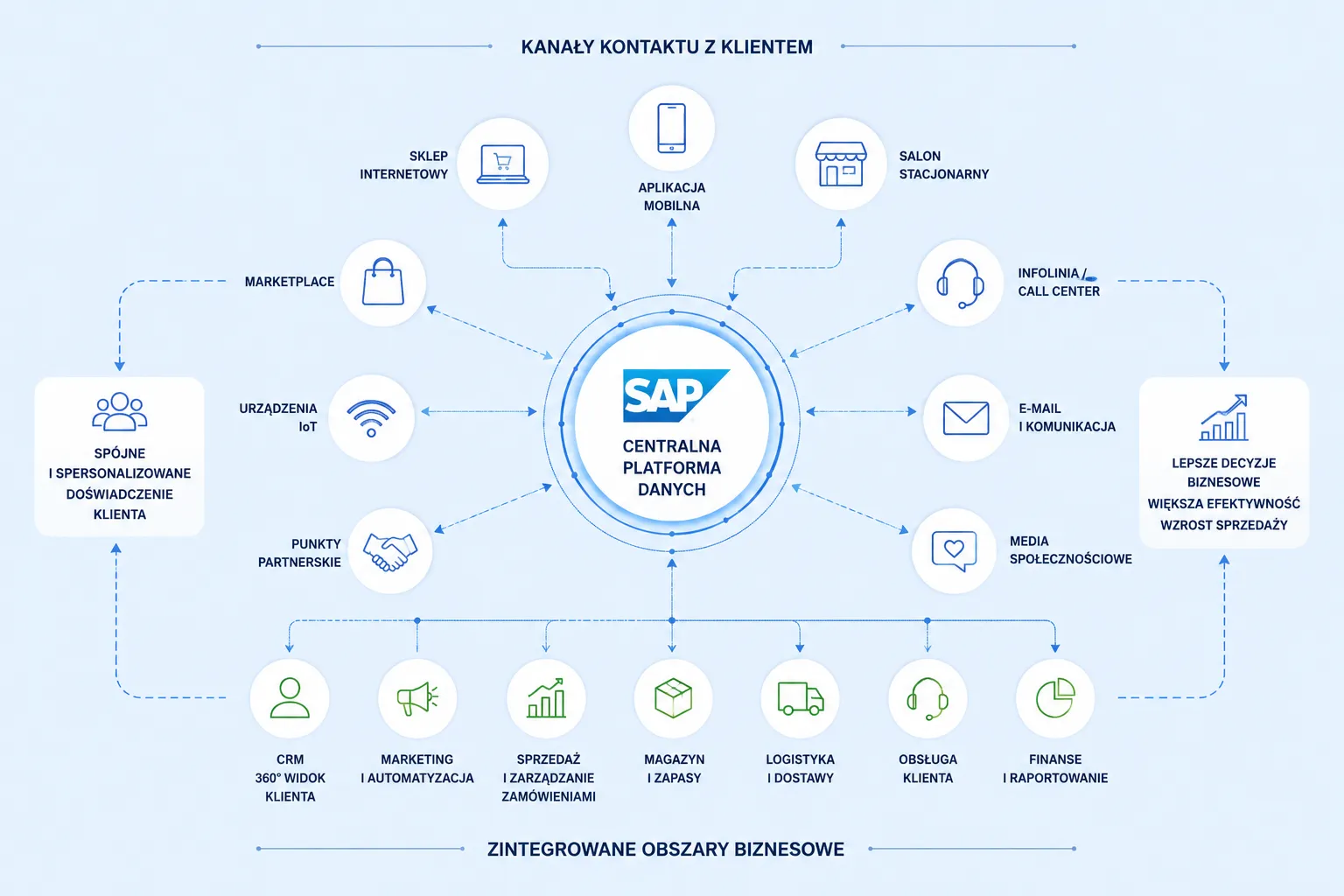
Which SAP Solutions Support Omnichannel Sales?
The SAP ecosystem offers a comprehensive portfolio of solutions that work together to create a unified environment for managing omnichannel commerce.
Key SAP cloud solutions in an Omnichannel Strategy:
SAP S/4HANA – The Core Enterprise Management System
At the heart of an omnichannel architecture is SAP S/4HANA, which serves as the organization’s central ERP platform. It manages critical business processes such as order processing, finance, inventory management, logistics, procurement, and manufacturing.
By integrating with all sales channels, SAP S/4HANA ensures that inventory levels, pricing, customer data, and order statuses are updated in real time. This enables customers to access accurate information regardless of where they choose to shop.
SAP Commerce Cloud
SAP Commerce Cloud is an enterprise-grade e-commerce platform designed to support both B2B and B2C omnichannel sales. The solution enables businesses to deliver personalized shopping experiences, manage multiple online storefronts from a single platform, support multiple languages and currencies, integrate seamlessly with ERP and CRM systems, enable services such as Click & Collect and Buy Online, Pick Up In Store (BOPIS) and more. By connecting digital and physical sales channels, SAP Commerce Cloud provides a consistent customer experience across all devices and touchpoints.
SAP Sales Cloud
SAP Sales Cloud empowers sales teams with a complete view of customer relationships and sales activities. By accessing customer interactions across all channels, sales representatives can create personalized offers, identify new opportunities, and accelerate the sales cycle. Information is synchronized across the SAP ecosystem, ensuring that every department works with the same up-to-date customer data.
SAP Service Cloud
Customer service is a fundamental component of any successful omnichannel strategy. SAP Service Cloud consolidates customer inquiries from multiple communication channels, including phone, email, live chat, web forms, and social media. Service agents gain access to a unified history of interactions and purchases, allowing them to resolve issues more efficiently and deliver a higher level of customer satisfaction.
SAP Customer Data Cloud
Delivering personalized omnichannel experiences requires effective customer identity and consent management. SAP Customer Data Cloud enables organizations to build a unified customer profile by consolidating data from multiple sources. This comprehensive customer view supports advanced personalization, targeted marketing campaigns, and consistent communication across every sales and service channel.
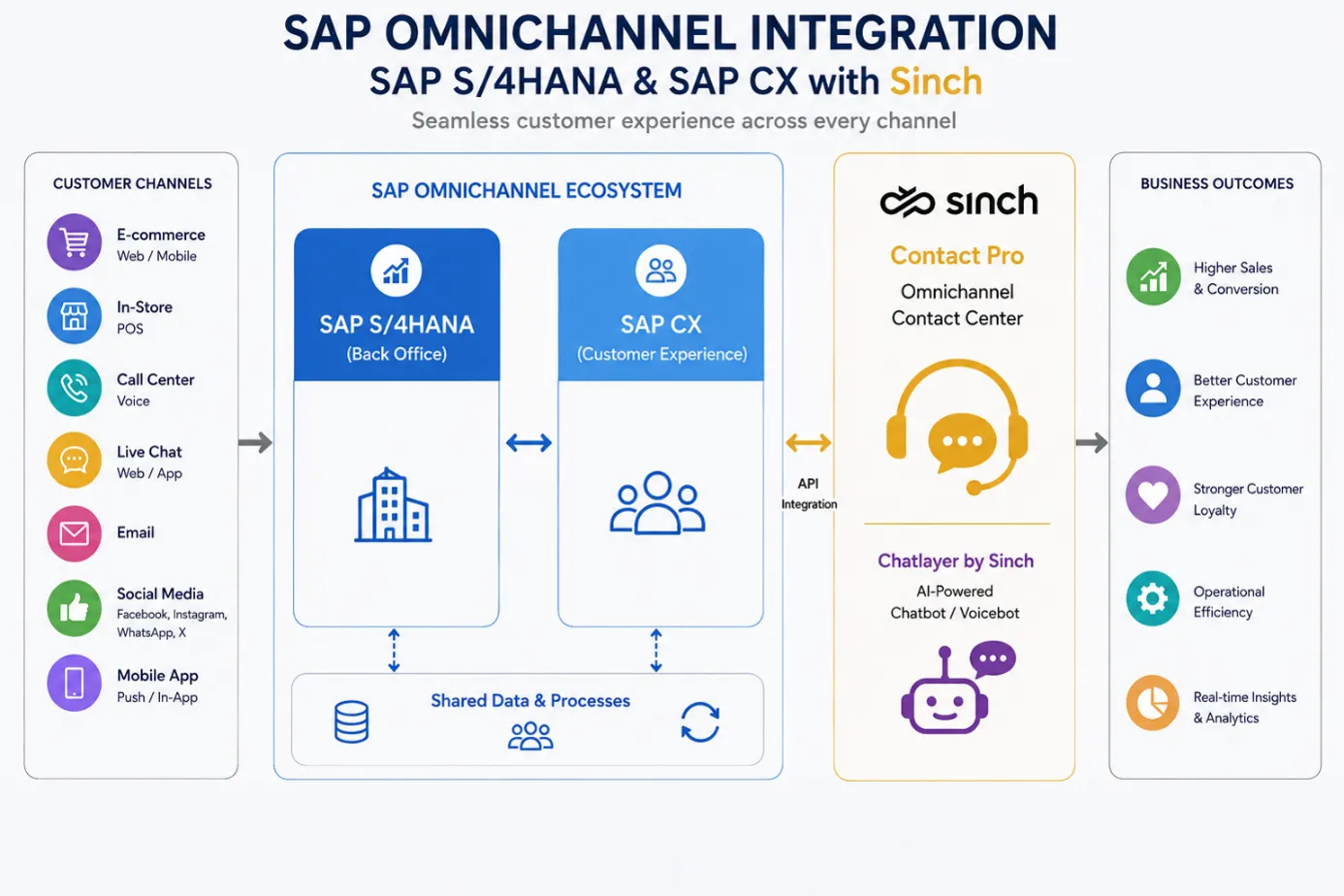
Sinch Contact Pro and Chatlayer by Sinch
Sinch supports the SAP ecosystem through deep integration that centralizes customer communication in one place. With SAP Endorsed App status, Sinch solutions provide seamless omnichannel service in a homogeneous IT environment.
Key areas of Sinch and SAP integration include:
- Sinch Contact Pro: This advanced Contact Center solution (SAP-endorsed) integrates directly with SAP S/4, SAP C4C, SAP CX, SAP Sales & Service, and SAP Commerce. It consolidates several communication channels into a single interface, including phone, chat, email, video, and instant messaging (SMS, WhatsApp, RCS).
- Integration with SAP Engagement Center (SAP Emarsys): Combines the SAP marketing automation system with Sinch’s omnichannel messaging capabilities, enabling the creation of personalized campaigns and increased customer engagement.
- Chatlayer by Sinch: Enables building advanced chatbots and voicebots using artificial intelligence automating customer service in SAP systems.
Why Does SAP Omnichannel Increase Sales?
Customers who engage with multiple sales channels tend to spend more and are more likely to become repeat buyers. The convenience of moving seamlessly between online and offline touchpoints significantly improves the purchasing experience.
SAP enables companies to create an integrated environment where customers can:
- Start shopping online and collect their order in-store.
- Check product availability in real time.
- Receive personalized product recommendations.
- Access the same promotions across all sales channels.
- View a unified order history and customer service interactions.
Providing this level of consistency builds trust, strengthens customer loyalty, and increases conversion rates.
Key Benefits of SAP Omnichannel
Unified Customer Data: One of the biggest challenges for modern organizations is fragmented customer information spread across different systems. SAP consolidates data from multiple sources to create a comprehensive customer profile. Sales representatives and customer service teams gain immediate access to purchase history, preferences, and previous interactions, enabling more effective communication and faster issue resolution.
Analyze data: Leveraging data analytics allows retailers to receive highly granular information that’s useful in real-time product customization and demand forecasting. This knowledge isn’t just convenient for businesses looking to minimize waste—it can also offer customers a better prediction of shipping and delivery times and personalized communication. Additionally, analytics help identify the most profitable sales channels, monitor customer behavior, and optimize business strategies.
Personalized Customer Experiences: With access to centralized customer data, businesses can deliver highly personalized offers tailored to individual needs and purchasing behavior. Personalized marketing campaigns and product recommendations lead to higher engagement and increased average order value.
Efficient Inventory Management
By connecting warehouses, retail stores, and e-commerce platforms, SAP provides real-time inventory visibility across the entire organization. Customers always receive accurate stock information, while businesses reduce the risk of overselling and improve supply chain efficiency.
Process Automation
SAP automates key business processes, including order fulfillment, logistics, invoicing, and after-sales service. Automation reduces operational costs, minimizes manual errors, and shortens delivery times, resulting in a better overall customer experience.
FAQ
What is SAP Omnichannel?
SAP Omnichannel is a business approach that connects all customer touchpoints—including e-commerce, physical stores, contact centers, mobile apps, and social media—into a single, integrated ecosystem. It enables organizations to deliver a consistent customer experience while synchronizing customer, product, and order data across every channel.
Which SAP solutions support an omnichannel strategy?
SAP offers several solutions that together enable omnichannel commerce: SAP S/4HANA ( central ERP for finance, inventory, orders, and logistics), SAP Commerce Cloud (enterprise e-commerce platform for B2B and B2C), SAP Sales Cloud (solution supporting sale), SAP Service Cloud (for omnichannel support), and SAP Customer Data Cloud – (data and processes center). Together, these solutions create a unified platform for managing customer journeys across all channels.
What are the benefits of SAP Omnichannel?
Organizations implementing SAP Omnichannel can benefit from: higher sales and conversion rates, consistent customer experiences across all channels, real-time inventory visibility, personalized marketing and product recommendations, faster order fulfilment, improved customer loyalty, better business insights through centralized analytics.
Can SAP integrate with third-party e-commerce platforms?
Yes. SAP integrates with many leading e-commerce platforms, including Adobe Commerce (Magento), Shopify, WooCommerce, PrestaShop, and BigCommerce. These integrations synchronize products, pricing, inventory, and order information between the online store and SAP ERP.
How does SAP integrate with contact center solutions?
The only omnichannel contact center solution recommended by SAP is Sinch Contact Pro, enabling customer service agents to access customer information directly from SAP while handling voice calls, emails, chat, messaging apps, and social media interactions. This native integration creates homogenous IT environment and improves response times and delivers a more personalized customer experience.
Which AI chatbot integrates best with SAP Omnichannel?
Chatlayer by Sinch adds AI-powered chatbots and voicebots to the SAP customer experience ecosystem. It automates routine customer inquiries, supports self-service, qualifies leads, and seamlessly transfers complex interactions to live agents with full conversation context.
Can SAP provide a single customer view?
Yes. By combining SAP Customer Data Cloud, SAP Sales Cloud, SAP Service Cloud, and SAP S/4HANA, organizations can create a unified customer profile containing purchase history, preferences, support interactions, and marketing permissions. This enables personalized engagement across every touchpoint.
Is SAP Omnichannel suitable for B2B companies?
Yes. SAP Customer Experience and SAP S/4HANA are designed to support complex B2B sales processes, such as individual price lists, commercial agreements, multi-level order approval processes, extensive product catalogs, and integration with customer purchasing systems.
What industries benefit most from SAP Omnichannel?
SAP Omnichannel is widely used across industries, including: retail, wholesale and distribution, manufacturing, consumer products, automotive, telecommunications, healthcare, utilities. Any organization managing multiple customer touchpoints can benefit from an integrated omnichannel strategy.
How does SAP improve customer experience?
SAP enables businesses to deliver personalized, consistent, and seamless customer journeys. Customers can move between online and offline channels without repeating information, while employees have immediate access to real-time customer and order data, resulting in faster service and higher satisfaction.
Why integrate SAP with contact center Sinch Contact Pro?
Integrating SAP with Sinch Contact Pro combines enterprise business processes with advanced omnichannel communications. Customer service teams gain access to real-time SAP data during interactions, while customers enjoy consistent support across voice, email, chat, messaging apps, and AI-powered chatbot and voicebot channels. The result is improved operational efficiency, better customer experiences, and increased sales opportunities.
Author:
Joanna Pytlakowska
VP Sales & Marketing, Comtrust

Dowiedz się, jak klienci korzystają z naszych produktów i usług. Zapraszamy do kontaktu!


Produkty
SAP Customer Experience
SAP Field Service Management
SAP Conversational AI
SAP Intelligent Robotic Process Automation
Sinch Contact Pro
Infrastruktura VoIP
1trust Service
Usługi
Wdrożenia
Zarządzanie projektami
Integracje i pomoc techniczna
O nas
O firmie
Partnerzy i technologie
Aktualności