
Call Center System Features – IVR and ACD: How They Work and Why They Matter
In the modern call center system, the IVR and ACD features are responsible for automatic handling of callers and intelligently directing them to the appropriate consultants.
Well-configured IVR and ACD solutions can reduce waiting times, improve call distribution, support agents in their daily work and create a better customer experience. But what exactly do these technologies do? What is the difference between IVR and ACD, and why are they so important for a modern Call Center?
In this article, we explain how IVR and ACD systems work, what their main benefits are and what businesses should consider when choosing a Call Center solution.
Key Information – Call Center, IVR, and ACD
- IVR is an automated voice system that guides customers through a telephone menu. It can identify callers, provide information, handle simple inquiries, and route calls to the appropriate department or service agents.
- ACD automatically distributes incoming calls to the most suitable agents or queues. Calls can be routed based on agent availability, skills and competencies, language, type of inquiry, waiting time, and other predefined criteria.
- IVR and ACD work together to streamline the customer journey. IVR helps identify the customer’s needs, while ACD ensures that the call reaches the right agent or queue.
- Integrating IVR and ACD with a CRM system gives agents quick access to customer information, contact history, orders, previous requests, and other relevant data, enabling faster and more personalized service.
- Call automation can reduce waiting times, minimize unnecessary transfers, and relieve agents from repetitive tasks. To be effective, an IVR system should be simple, concise, and intuitive, allowing customers to reach the right service as quickly as possible.
- Artificial intelligence can further enhance IVR and ACD by helping create and optimize voice messages, analyze call and routing data, identify recurring customer issues, and provide insights that support better problem-solving and more effective team management.
What is IVR in a Call Center system?
IVR (Interactive Voice Response) is an automated voice response system that allows companies to automate telephone customer service. Its main purpose is to interact with callers using pre-recorded voice messages and allow them to select the appropriate service or department using the telephone keypad or voice recognition technology.
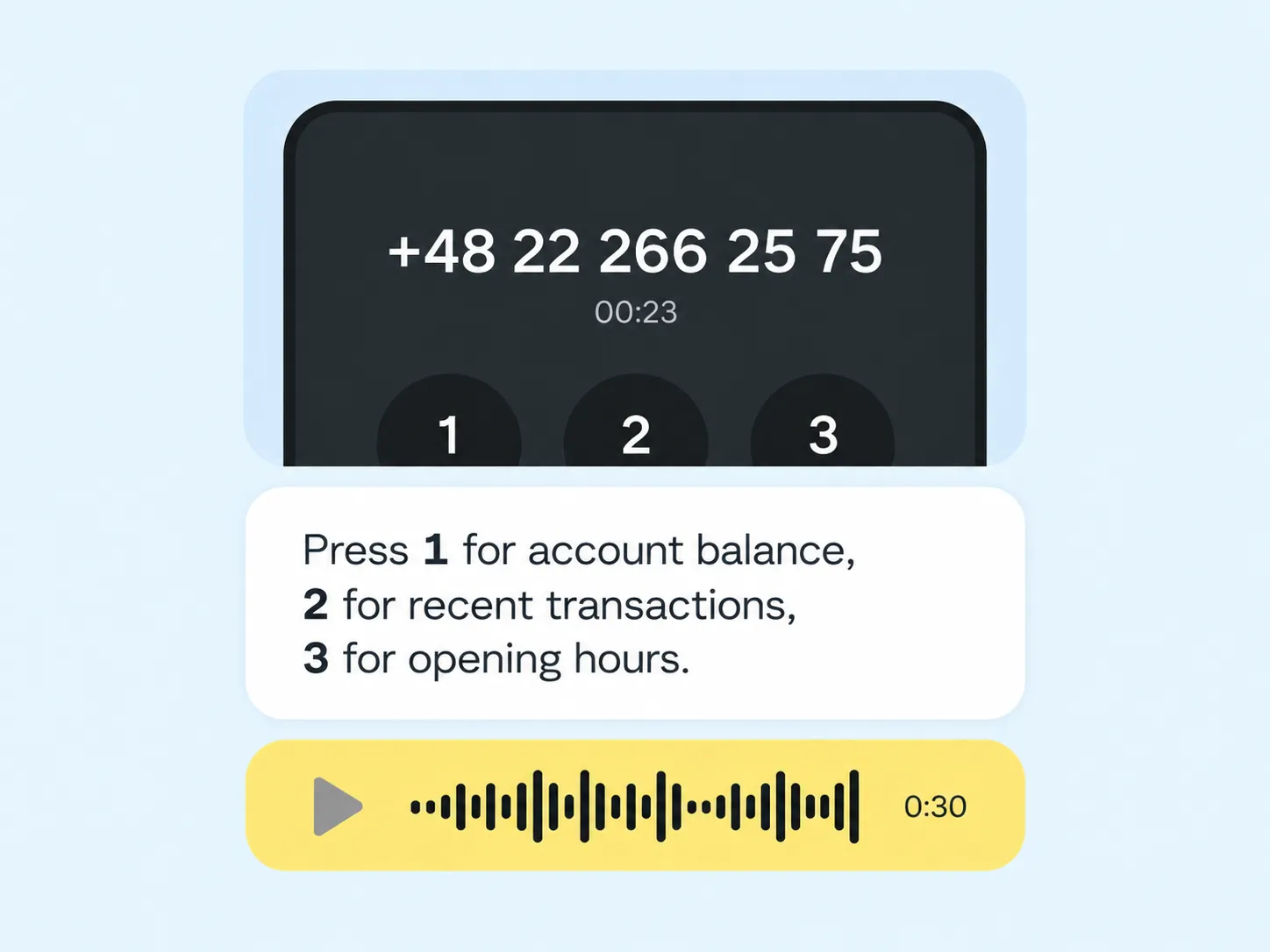
IVR is often the first stage of a customer interaction. Before a call reaches an agent, the system can collect basic information, identify the reason for the call, provide information about opening hours, GDPR, promotions or route the customer to the appropriate department.
IVR can support a wide range of customer service processes. Common features include:
- automated voice menus,
- call routing to specific departments,
- customer identification,
- automated information delivery,
- after-hours service,
- estimated waiting time announcements,
- automated handling of simple requests,
- integration business applications, like CRM (data extraction or entry).
One important feature available in Sinch Contact Pro is the ability to allow customers to decline recording. Although the call will not be recorded, the customer will not be left without assistance.
What is ACD in a Call Center?
ACD (Automatic Call Distribution) is a technology responsible for automatically distributing incoming calls between agents and queues. An ACD system before redirect a particular call to agents or quess it analyzes predefined criteria and factors such as:
- agent availability and skills
- language and geographical region
- customer profile and previous interactions
- waiting time
- queue position
- predefined business rules.
This eliminates the need for manual call transfers and allows the system to manage incoming traffic automatically.
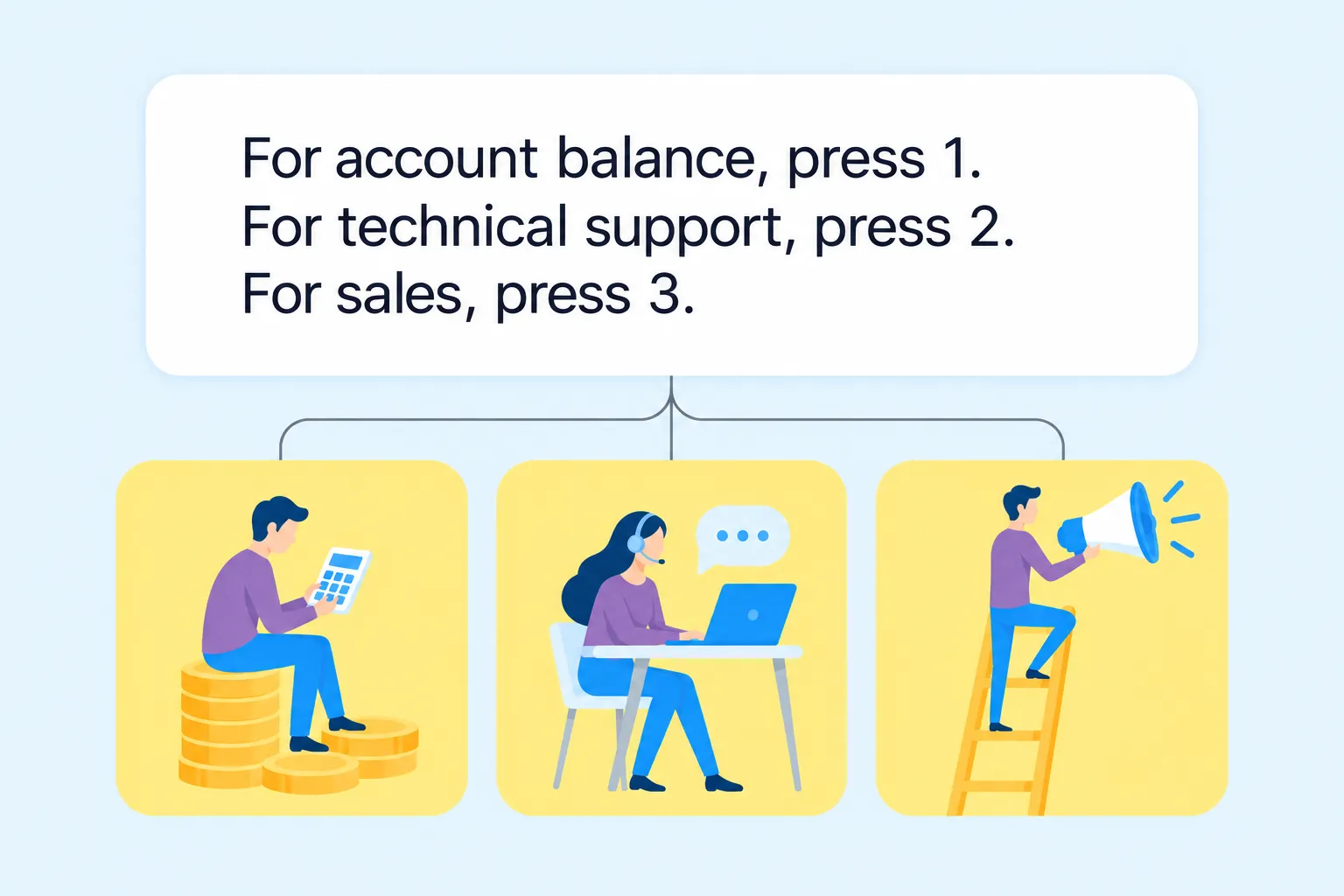
The ACD system manages telephone traffic without the need for manual call transfers. If a customer selects a conversation topic via the IVR, his call will be placed in the appropriate queue. The ACD system checks which agents are available and which of them have the skills required to handle the request. Skill-based routing takes into account the agents’ best skills – language, product knowledge, specialization, and personal skills. If several agents are available, the system can use a predefined distribution strategy. If all agents are busy, it can place the customer in a queue and inform them of the waiting time. Sinch Contact Pro an callback option allowing the customer to request a callback. This eliminates the need for the customer to wait on hold. The system saves their request, and the agent can contact them later.
IVR vs. ACD – what is the difference?
IVR and ACD are often used together, but they perform different functions within the call center. In simple terms, IVR helps determine what the customer needs, while ACD determines who should handle the call. Combining these technologies creates a structured and partially automated customer service process.
Why are IVR and ACD important for Call Centers?
Implementing IVR and ACD can provide businesses with a number of significant benefits like for example reducing the time customers need to reach the right agent, issues are resolved faster, often upon first contact, and the quality of service is improved. ACD efficiently utilizes available resources and distributes calls according to established busienss rules. For some issues, customers find solutions themselves in the IVR without involving an employee.
IVR and ACD integration with CRM
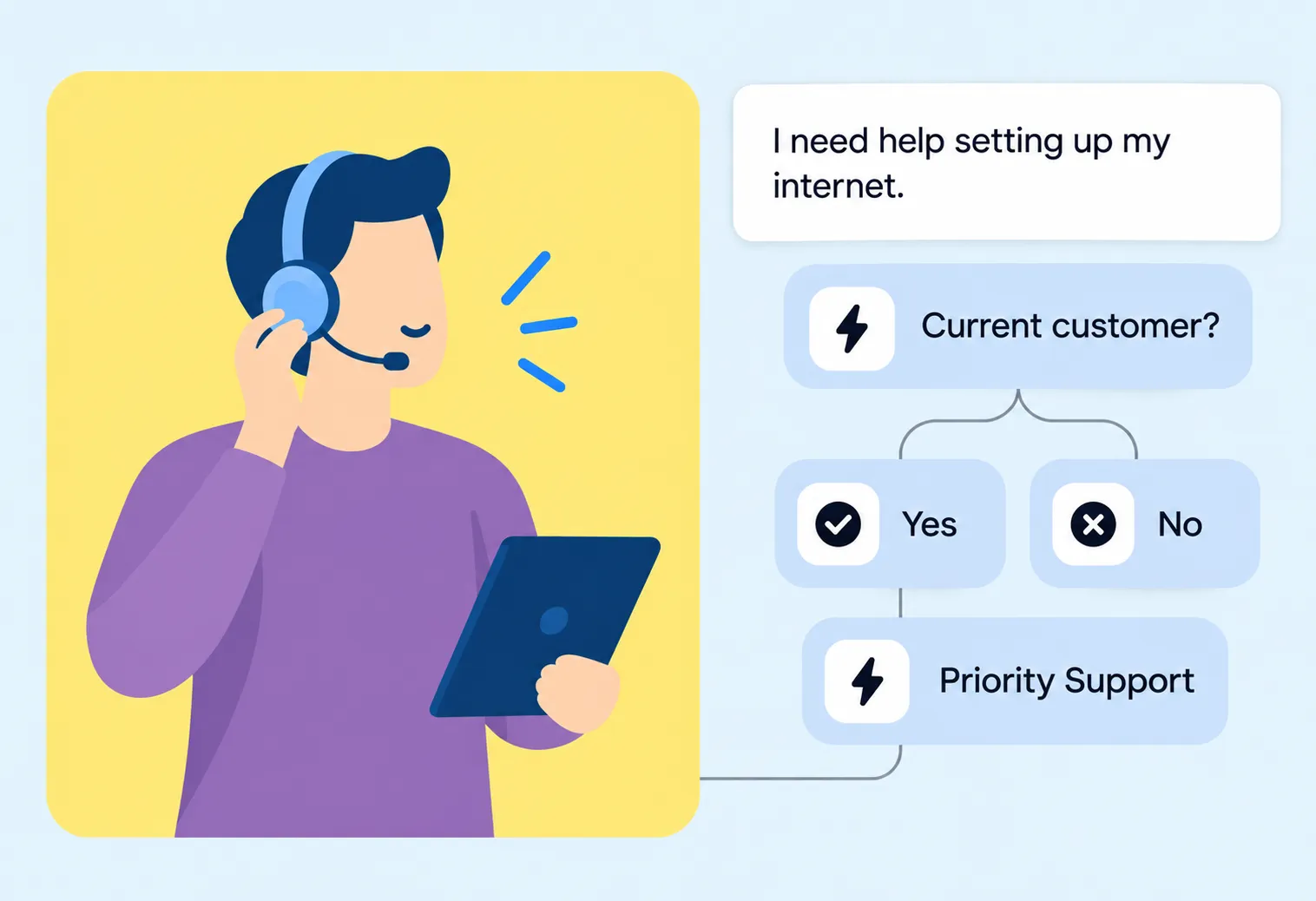
The full potential of IVR and ACD can often be achieved by integrating them with a CRM or other business applications. Thanks to integrations Comtrust creates automation and self-service tools. Furthermore, calls are often “flagged” before they reach agents, and the system takes into account unusual customer characteristics, such as VIP status or assignment to a specific account manager. Connecting telephony with customer data allows agents to receive relevant information as soon as a call arrives like the customer’s contact details, previous interactions, open cases, orders or other relevant information. As a result, agents can focus on solving the customer’s issue rather than searching for basic information.
How to best implement IVR and ACD
IVR and ACD are two of the most important features of call center system. When combined, they can create a more efficient customer service process, reduce waiting times, improve agent productivity and support a better customer experience (which often begins with IVR and ACD). Poorly designed IVRs and ACDs can be counterproductive. Overly complex menus, lengthy messages, and a lack of self-service and quick contact options can irritate customers. Therefore, when designing an IVR, it’s important to prioritize simplicity and ease of communication.
Finally, artificial intelligence can streamline IVR development and updates while providing valuable support for day-to-day management. For example, text-to-speech technology enables the rapid creation and updating of voice messages in multiple languages. Meanwhile, business intelligence and call path analysis can help identify trends, detect bottlenecks, and address issues related to customer service, sales, and team performance.
FAQ – Call Center System Features: IVR and ACD
What is IVR in a Call Center?
IVR (Interactive Voice Response) is an automated voice response system that guides customers through a telephone menu. It can provide information, identify callers, handle simple requests, and route calls to the appropriate department or agent.
What is ACD in a Call Center?
ACD (Automatic Call Distribution) is a system that automatically distributes incoming calls to the appropriate agents or queues. It can use criteria such as agent availability, skills, language, customer type, or the reason for the call.
What is the difference between IVR and ACD?
IVR interacts directly with the caller and helps determine what the customer needs. ACD takes this information and determines where the call should be routed. In simple terms, IVR identifies the customer’s needs, while ACD connects the customer with the right agent or queue.
What are the main benefits of IVR?
IVR can reduce the workload of Call Center agents, provide customers with faster access to information, improve call routing, and reduce unnecessary transfers. It can also provide automated service outside regular business hours.
What are the main benefits of ACD?
ACD helps distribute calls efficiently across the contact center. It can reduce waiting times, balance agent workloads, route calls based on employee skills, and improve the likelihood that a customer will reach the right person on the first attempt.
Can IVR and ACD be integrated with a CRM system?
Yes. Integrating IVR and ACD with a CRM system allows agents to access relevant customer information, contact history, orders, previous interactions, and open requests. This can make conversations faster and more personalized.
Can IVR handle calls without an agent?
Yes. Depending on the system and configuration, IVR can provide automated information and handle certain simple requests without involving a Call Center agent. This can reduce call volume and allow employees to focus on more complex customer issues.
What is skills-based routing?
Skills-based routing is a call distribution method that matches incoming calls with agents based on their specific skills or qualifications. Criteria can include language, product knowledge, technical expertise, or customer service specialization.
What is callback?
Callback allows customers to request a return call instead of waiting in a telephone queue. The system records the request and an agent contacts the customer later. This feature can improve the customer experience, particularly during periods of high call volume.
Is IVR secure and compliant?
Yes, Sinch Voice API offered by Comtrust is ISO 27001, GDPR, and STIR/SHAKEN compliant and supports TLS/SRTP encryption for secure communications.
What makes a good IVR system?
An effective IVR should be simple, concise, logical, and easy to navigate. Customers should be able to identify the correct option quickly and reach a human agent when necessary. Overly complex menus and long voice messages can negatively affect the customer experience.
How can AI improve IVR and ACD?
Artificial intelligence can support IVR development and optimization, for example by generating and updating voice messages using text-to-speech technology. AI and advanced analytics can also analyze call flows, identify recurring customer issues, detect bottlenecks, and provide insights that support sales, customer service, and team management.
What should you consider when choosing a Call Center system with IVR and ACD?
When evaluating a Call Center platform, consider its IVR configuration options, ACD routing capabilities, skill-based routing, CRM integrations, call queues, callback functionality, reporting and analytics, scalability, security, and technical support. It is also worth during PoC (Proof-of-Concept) testing the system before implementation to ensure it meets the needs of both customers and agents.
Author:
Joanna Pytlakowska
VP Sales & Marketing, Comtrust


Dowiedz się, jak klienci korzystają z naszych produktów i usług. Zapraszamy do kontaktu!


Produkty
SAP Customer Experience
SAP Field Service Management
SAP Conversational AI
SAP Intelligent Robotic Process Automation
Sinch Contact Pro
Infrastruktura VoIP
1trust Service
Usługi
Wdrożenia
Zarządzanie projektami
Integracje i pomoc techniczna
O nas
O firmie
Partnerzy i technologie
Aktualności