Contact Center: What Is It and How Does It Differ from a Call Center?
CC, in short, Call Center, or CC-Contact Center, is always confused by customers and users, even by system integrators. Although they are used interchangeably in casual conversation, they actually differ in their scope of operation. A contact center leverages a wide array of digital channels and advanced analytics to manage customer relationships, while a call center primarily focuses on telephone-based communication.
This article explains the differences between them to help you choose the best solution—such as Sinch Contact Pro (implemented by Comtrust), which offers world-leading functionality for both call and contact centers.
Key Information
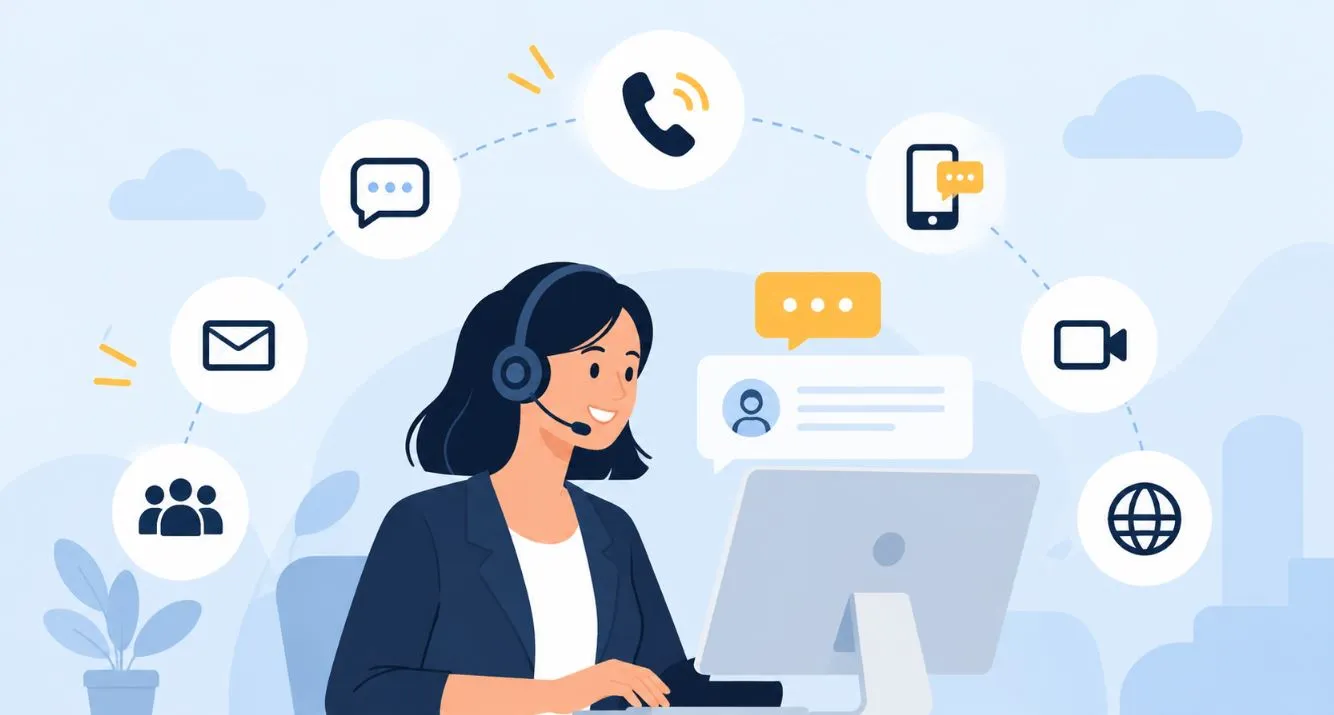
- Contact Center manages customer interactions across multiple channels, including phone, email, live chat, SMS, RCS, Whatsapp and social media.
- Call Center primarily handles inbound and outbound telephone calls for customer service, sales, and support.
- Key difference: Call centers focus on voice communication, while contact centers support multiple communication channels (including phone) and may integrate interaction histories across them.
- Key features: Contact centers use intelligent routing, CRM integration, automation, AI, and analytics to improve service delivery.
- Main benefits: Improved customer experience, greater operational efficiency, increased agent productivity, better reporting, and enhanced scalability.
- Omnichannel communication: integrates communication and digital channels and helps customers switch between them more seamlessly without repeatedly explaining their issues.
- Choosing the right solution: Businesses should consider customer preferences, communication volumes, integration needs, security requirements, budget, and growth plans.
- Future trends: Cloud technology, AI-powered assistance, and automation are transforming contact centers while human expertise remains essential for complex customer interactions.
What is Contact Center?
Contact center is a business function or technology-enabled operation that manages customer interactions across multiple communication channels. These channels may include phone calls, email, live chat, SMS, RCS, social media, messaging applications, and self-service tools.
Contact Center is a customer service hub where a team of consultants with the appropriate expertise assists customers and provide service. In both attitudes, the system and the hub, the main purpose is the same: to provide consistent, efficient, and personalized customer service throughout the customer journey in each channel. Depending on the organization, contact centers may also support sales, technical assistance, order management, customer retention, and other business processes.
What is Call Center?
Given that the telephone remains the dominant channel for customer-brand interactions, the term “call center” is commonly used to refer to a customer service team – whether working remotely or on-site – that handles customer inquiries via phone. For a technology company like Comtrust, however, Call Center is one component of a broader Contact Center system integrated with CRM and voicebots. It is a specific communication channel that requires specialized functionality.
A call center organisation primarily manages customer communication over the telephone. It may handle incoming calls or make outgoing calls, so call centers are commonly divided into two main categories:
- Inbound call centers: Handle incoming customer calls, such as support requests, product inquiries, complaints, and order-related questions.
- Outbound call centers: Make outgoing calls for telemarketing, lead generation, customer follow-ups, market research, and payment reminders.
Some call centers handle both inbound and outbound communication, depending on business needs.
Call center software typically includes automatic call distribution (ACD), interactive voice response (IVR), call recording, call routing, and performance reporting. These features help organizations manage call volumes, distribute workloads, and monitor service quality.
When is Call Center sufficient, and when switch to Contact Center system?
For businesses whose customers prefer telephone communication, a call center can be an effective way to deliver direct, personal support and manage high volumes of calls efficiently. However, as customers increasingly use digital communication channels, many traditional call centers are expanding their capabilities and evolving into contact centers.
Contact Center vs. Call Center: What Is the Difference?
The primary difference between Contact Center and Call Center is the range of communication channels they support. Call Center focuses on telephone calls, while Contact Center manages interactions across multiple channels. This distinction affects the technology used, the customer experience delivered, and the way businesses organize their customer service operations.
|
Feature |
Call Center |
Contact Center |
|
Primary communication |
Telephone calls |
Omnichannel communication |
|
Supported channels |
Inbound and outbound calls, Voicebot |
In/outbound, mixed channels: phone, email, chat, SMS, RCS, Whatsapp, social media, and more |
|
Customer interaction history |
Primarily call-based |
Can combine interactions across channels |
|
Customer experience |
Focused on voice interactions |
Designed for connected, multichannel interactions (including voice) |
|
Self-service options |
Mainly IVR and automated phone menus, voicebot |
IVR, chat/voicebots, knowledge bases, and other digital tools |
|
Common use cases |
Phone support, telemarketing, appointment booking |
Customer service, sales, technical support, marketing and omnichannel engagement (retail, utilities, finance, banking, e-commerce) |
The actual capabilities depend on the platform, configuration, and business requirements. It is worth paying attention to what can be easily tailored to your business needs versus what necessitates actual coding.
Key Features of a Modern Contact Center
A modern contact center combines people, processes, data and technology to help businesses manage customer communication effectively. Its most important features often include the following.
|
Feature |
Business tasks |
|
Omnichannel Communication |
It allows customers to interact with a company through their preferred channels. Instead of treating every conversation as a separate event, an integrated contact center can connect interactions from different channels and make relevant information available to agents keeping the conversation context. For example, a customer who starts a conversation on a website can continue it by phone without having to explain the entire issue again. Omnichannel communication helps create a more consistent customer experience and gives businesses greater flexibility in how they provide support. |
|
Intelligent Call and Interaction Routing |
Contact centers use routing rules to direct customer interactions to the most appropriate agent or team. Routing may consider the reason for contact, agent skills, language, availability, priority, or customer history. Effective routing can reduce unnecessary transfers, improve response times, and help ensure that customers reach the right person more quickly. Without it, in an extreme scenario, a customer could be repeatedly transferred to different agents and never reach the right one. |
|
CRM Integration |
CRM integration gives agents access to relevant customer information, such as previous interactions, account details, purchases, marketing campaigns and loyalty programmes and open support cases. Your CRM technology manages relationships, customer service, and sales. It supports agents and helps personalize interactions and offers. However, CRM is incomplete without CC which is why this silos are typically integrated. This allows companies to handle customer service and sales through channels and time preferred by their customers, all while following defined business logic. In result service agents are able to multitask and increase their efficiency. Your CRM-CC integration reduces the need for customers to repeat information and helps agents deliver more personalized assistance. |
|
Automation and Artificial Intelligence |
Automation and AI can support routine tasks, improve agent productivity, and help customers find answers faster. Common examples include chat/voicebots, automated responses, call summaries, speech analytics, and AI-assisted knowledge retrieval. Their effectiveness depends on data quality, integration, appropriate configuration, and processes. |
|
Monitoring, Reporting and Performance Analytics
|
Their role is to help businesses understand how their customer service operations perform. Common metrics include average response time, first-contact resolution, customer satisfaction (CSAT), service level, and average handling time. There are three levels of analytics tools: real-time monitoring often displayed on a large screen showing current traffic, reporting covering all historical events, and advanced analytics which allows for the integration of contact data with other types of data and events. Monitoring these indicators helps managers identify bottlenecks, improve staffing, evaluate service quality, and make informed operational decisions. |
What are the benefits of Contact Center?
Moving from a call-only operation to an omnichannel Contact Center can offer several advantages, particularly for organizations with diverse customer communication needs.
- Better customer experience. Customers can choose how to contact a business, whether by phone, email, live chat, or another supported channel. Consistent interaction history can also reduce frustration and repetition.
- Greater operational efficiency. Automation, intelligent routing, and centralized interaction management can reduce manual work and help teams handle requests more effectively, while WFM tools optimize schedules.
- Improved agent productivity. Access to customer information, integrated tools, and AI-assisted workflows can help agents resolve issues with less effort.
- More informed business decisions. Centralized reporting provides insight into customer needs, channel usage, service quality, and operational performance.
- Scalability and flexibility. Cloud-based contact center solutions can make it easier to add agents, introduce new channels, and support distributed teams as business requirements change.
- Stronger customer relationships. Consistent, convenient, and personalized communication can contribute to customer satisfaction, trust, and long-term loyalty. Customers quickly get help, wherever it is most convenient for them.
When should a business choose Contact Center instead of Call Center?
The choice of the right solution depends on how customers communicate with your business and what your organisation aims to achieve.
A traditional call center may be sufficient if most customer interactions take place by telephone, the service process is relatively straightforward, and digital channels are not a major requirement. In such cases, it is worth choosing a system that offers rich functionality within the telephone channel – including voicebots – and supports advanced analytics.
A contact center may be a better choice if customers regularly switch between communication and contact channels, the business needs a unified view of interactions, or the organization wants to introduce digital self-service, automation, and advanced analytics.
How to choose the right Contact Center solution
Selecting a contact center platform requires more than comparing software features. Businesses should first identify their operational goals and customer expectations. Consider the following factors:
- Communication channels: Which channels do your customers use today, and which might they need in the future?
- Integration capabilities: Can the solution connect with your CRM, help desk, ERP, and other business systems? What data will be exchanged between systems? How will the systems behave when one of them is updated?
- Automation: Does it support the workflows, self-service options, and AI features relevant to your organization?
- Scalability: Can the platform accommodate seasonal demand, business growth, and remote or distributed teams?
- Analytics: Does it provide the metrics and reporting tools needed to measure customer experience and operational efficiency?
- Security and compliance: Does it meet applicable data protection, access control, recording, and industry-specific requirements?
- Total cost of ownership (TCO): What are the licensing, implementation, integration, training, maintenance, and ongoing operating costs? What will be the cost of maintaining the infrastructure once the CC is integrated with other systems?
The best solution is the one that meets your current requirements while providing a practical path toward future improvements, when the system and the provider inspire the implementation of better tools and processes, and offer guidance on how to reduce costs.
It is easy to imagine what a customer service department would look like without Contact Center, especially in an environment with high volumes of interactions across multiple channels. “Chaos and disorder”. Managing telephone-based customer service without CC would be extremely difficult, even impossible, particularly when multiple customers try to reach a company at the same time. Only one caller might get through, while others would hear a busy signal or an automated message “the line is unavailable”. Contact Center therefore provides not only structure and consistency but, in extreme cases, makes it possible to deliver customer service at all.
Frequently Asked Questions About Contact Centers and Call Centers
What is the main difference between a Contact Center and a Call Center?
Can Call Center become Contact Center?
Is Contact Center better than Call Center?
What is the difference between Multichannel and Omnichannel Contact Centers?
Are cloud Contact centers suitable for small businesses?
Author:
Joanna Pytlakowska
VP Sales & Marketing, Comtrust

Find out how customers use our products, services and SAP technology. Welcome to contact!


Products
SAP Customer Experience
SAP Field Service Management
SAP Conversational AI
SAP Intelligent Robotic Process Automation
Sinch Contact Pro
VoIP Infrastructure
1trust Service
Services
Implementations
Project management
Integration and Support
About us
Company and team
Partners and technologies
News